How to Wrap a Box

10 minutesEasy

Hands mid-wrap around a rectangular gift box in cream paper with a bold red ribbon on a clean surface
01

Gather Supplies

Everything you need before you start

Wrapping paper — One sheet large enough for your box

Scissors — Sharp for clean cuts

Clear tape — Double-sided tape for a seamless look

Ribbon (optional) — For the finishing touch

02

Measure & Cut Paper

Get the right amount the first time

The Measurement Formula

Width = Box circumference + 3" overlap

Length = Box length + (Box height × 2) + 4"

For a standard shoe box (14" × 8" × 5"), you'd need roughly 29" × 24" of paper.

  1. Unroll the wrapping paper face-down on a flat surface
  2. Place the box on the paper and roll it to check you have enough to go all the way around with overlap
  3. Check that both ends have enough paper to fold over (at least the height of the box plus 2 inches)
  4. Mark and cut in a straight line

Common Mistake
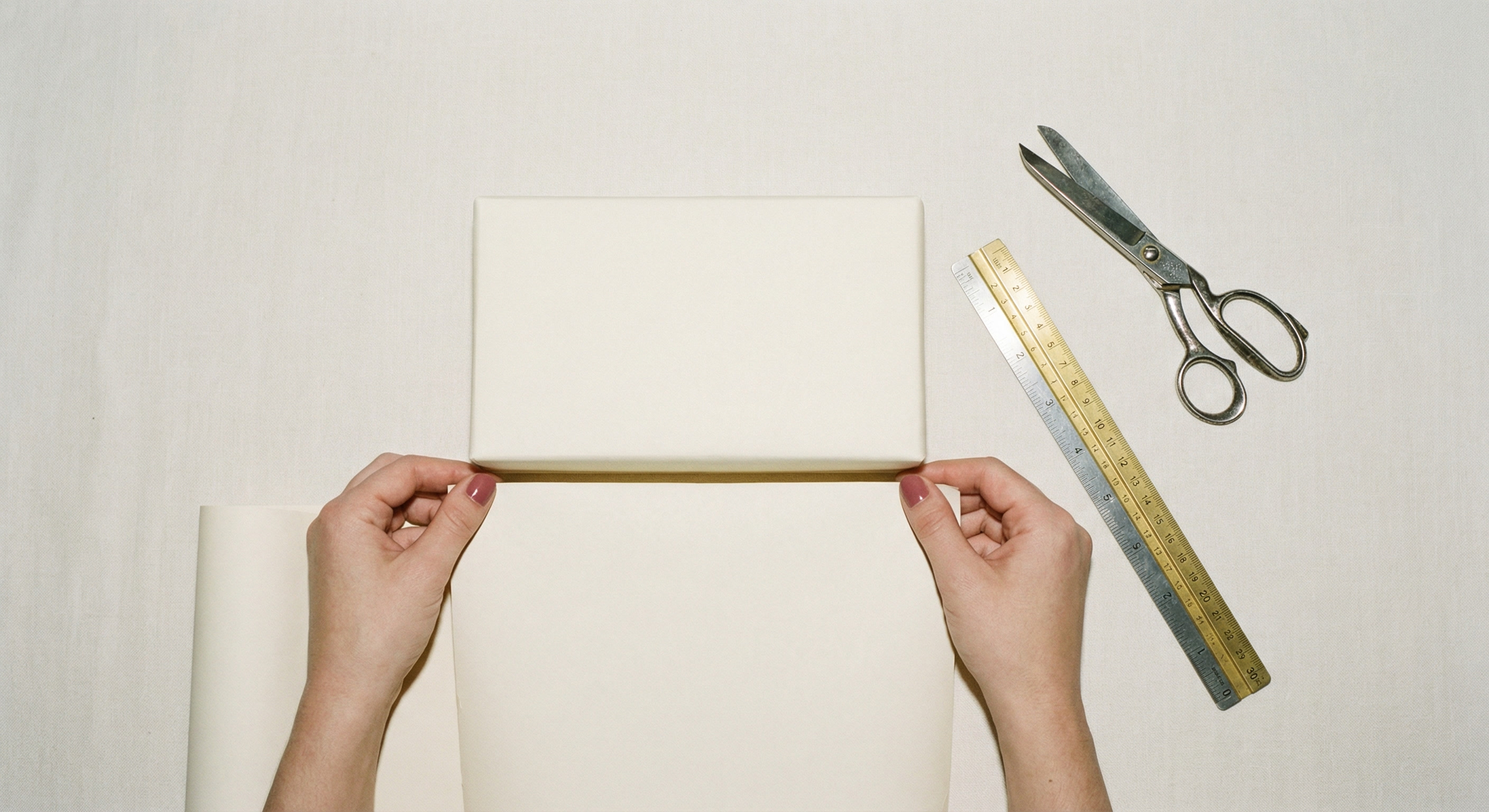
Always cut more paper than you think you need. You can trim excess, but you can't add more. An extra inch on each side saves you from starting over.

Top-down view of hands measuring cream wrapping paper against a rectangular gift box with scissors and a ruler nearby

03

Position the Box

Set up for clean folds

  1. Lay the wrapping paper face-down (pattern side down) on a clean, flat surface
  2. Place the box face-down in the center of the paper so the seam will be on the bottom
  3. Center the box so there's equal paper on the left and right sides
  4. For patterned paper, make sure the design is oriented correctly before you commit

Pro Tip

Working on a dining table or clean floor gives you the space you need. Avoid beds and couches—soft surfaces make it impossible to get crisp folds.
04

Wrap the Length

Secure the main body of the wrap

  1. Pull one long edge of paper up and over the box — It should reach past the center of the box by about an inch
  2. Tape that edge to the box — One piece of tape in the center holds it while you work
  3. Fold the opposite edge under by half an inch for a clean line — This creates a finished edge that overlaps neatly
  4. Pull the folded edge over to overlap the first side — Tape along the entire seam

Pro Tip
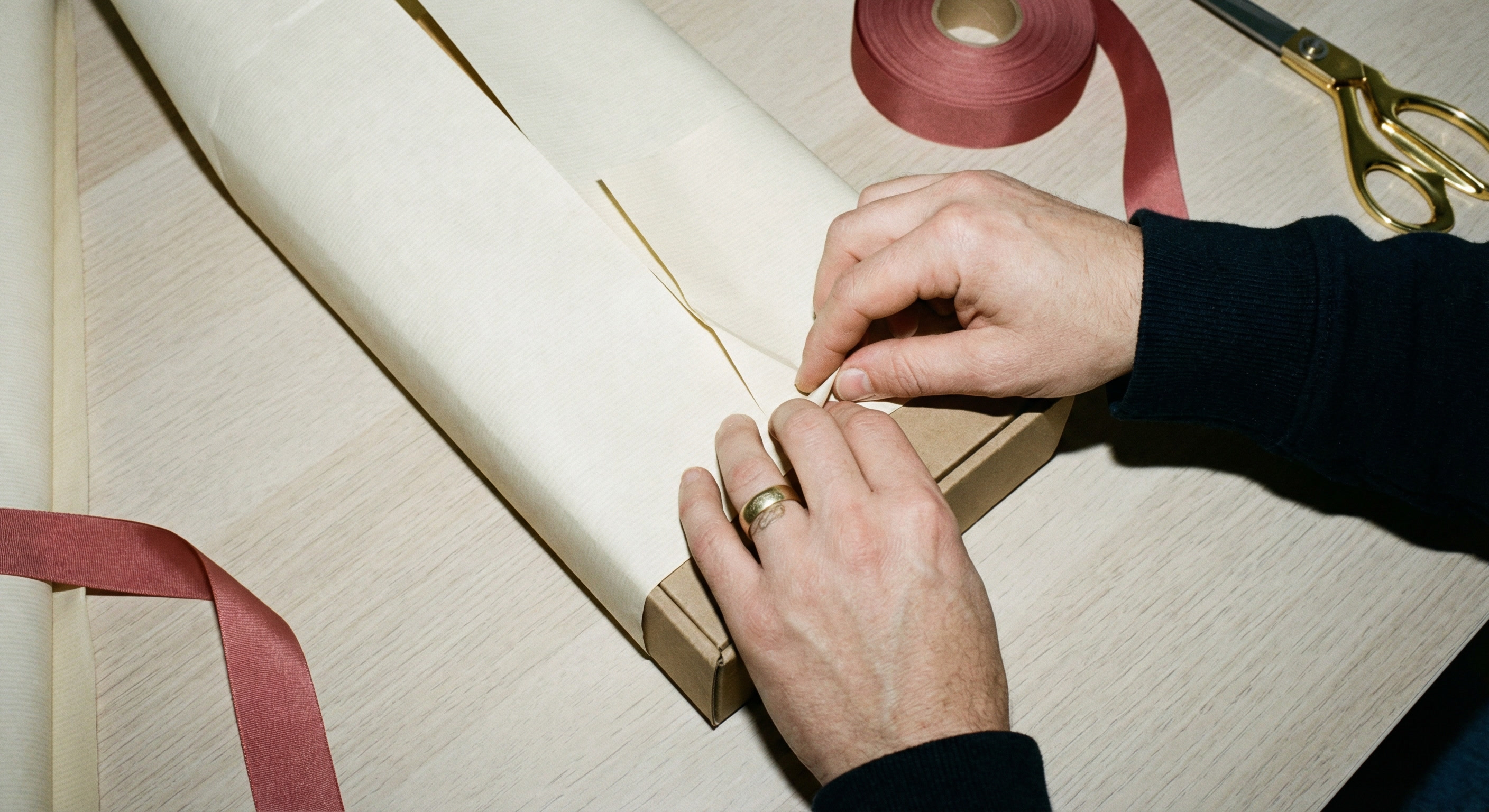
For the cleanest seam, fold the second edge under before taping so you get a finished fold rather than a raw paper edge. Double-sided tape here makes the seam invisible.

Close-up top-down view of hands folding the first long edge of cream wrapping paper neatly over a rectangular box

05

Fold the Ends

The triangle-fold method for crisp corners

For each end of the box:

  1. Push the top flap down against the end of the box and crease along the edge
  2. Fold the two side flaps inward—they'll naturally form triangles as you press them flat against the box
  3. Crease those triangles sharply with your fingernail
  4. Fold the bottom flap up and over the triangles
  5. Tape where the bottom flap meets the box

Common Mistake
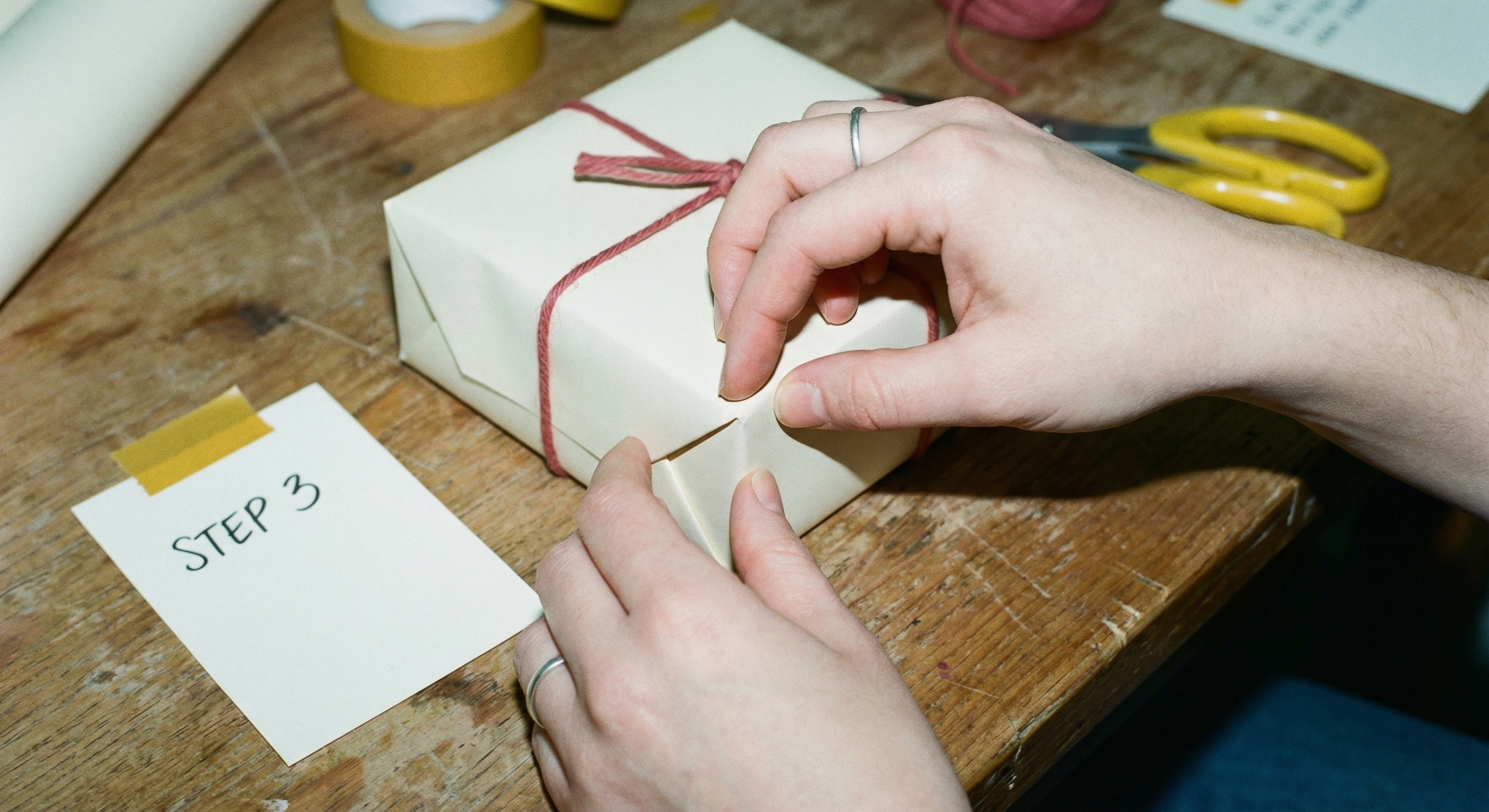
This is where most people get messy. The fix: slow down and crease every fold before taping. Run your fingernail along each edge to create a sharp line. Neat creases are the entire secret to professional-looking wrapping.

Top-down close-up of hands pinching and folding wrapping paper at the corner of a box to create a sharp triangular flap

06

Finish & Decorate

Add ribbon, bows, or tags

  • Check all seams are taped securely
  • Flip the box over so the clean side faces up
  • Add ribbon in a cross pattern: under the box, up both sides, tie on top
  • Tie a bow or attach a pre-made one
  • Add a gift tag or personal touch

Pro Tip

For a square box, wrap the ribbon diagonally for a more elegant look. For rectangular boxes, the classic cross pattern works best. Curl ribbon ends with scissors for a festive finish.

Three-quarter angle view of a perfectly wrapped rectangular gift box in cream paper with a bold red ribbon and simple bow


Box Wrapping by Size

Small Boxes

Jewelry boxes, gift card boxes. Cut paper precisely—excess bulk shows on small packages. Use double-sided tape for clean lines.

Medium Boxes

Shoe boxes, clothing boxes. The sweet spot. Standard wrapping paper rolls are sized for these. Follow the steps above exactly.

Large Boxes

Appliance boxes, moving boxes. You may need to tape two sheets together. Work on the floor and have a helper hold the paper taut.

Frequently Asked Questions

How much wrapping paper do I need for a box?
Measure around the box (width x 2 + height x 2) and add 3 inches for overlap. For the length, add the box height to each end plus 2 inches. When in doubt, cut more than you think you need—you can always trim.
How do I wrap a rectangular box?
Rectangular boxes follow the same technique as square boxes. Place the box face-down on the paper, wrap the long sides first, then fold the short ends using the triangle-fold method. The key difference: make sure you have enough paper to cover the longer sides.
What's the best way to wrap a large box?
For large boxes, work on the floor for more space. You may need to tape two sheets of wrapping paper together. Use a yardstick to measure and a rotary cutter for straight lines. Have a friend hold the paper taut while you tape.
How do I wrap a small box neatly?
Small boxes are actually harder because there's less margin for error. Cut the paper precisely (too much paper creates bulk), use small pieces of tape, and use your fingernail to create sharp creases. Double-sided tape gives the cleanest look on small packages.
How do I get perfectly crisp corners?
The secret is creasing. Before you tape anything, run your fingernail or a credit card along every fold to create a sharp line. Fold the paper tightly against the box edge, crease, then tape. Sharp creases are the difference between amateur and professional wrapping.
Can I wrap a box with wrapping paper that has a pattern?
Yes, but align the pattern before cutting. Place the box on the paper and check that the pattern is straight. For stripes, make sure they run parallel to the box edges. Cut extra paper so you can adjust the alignment.